
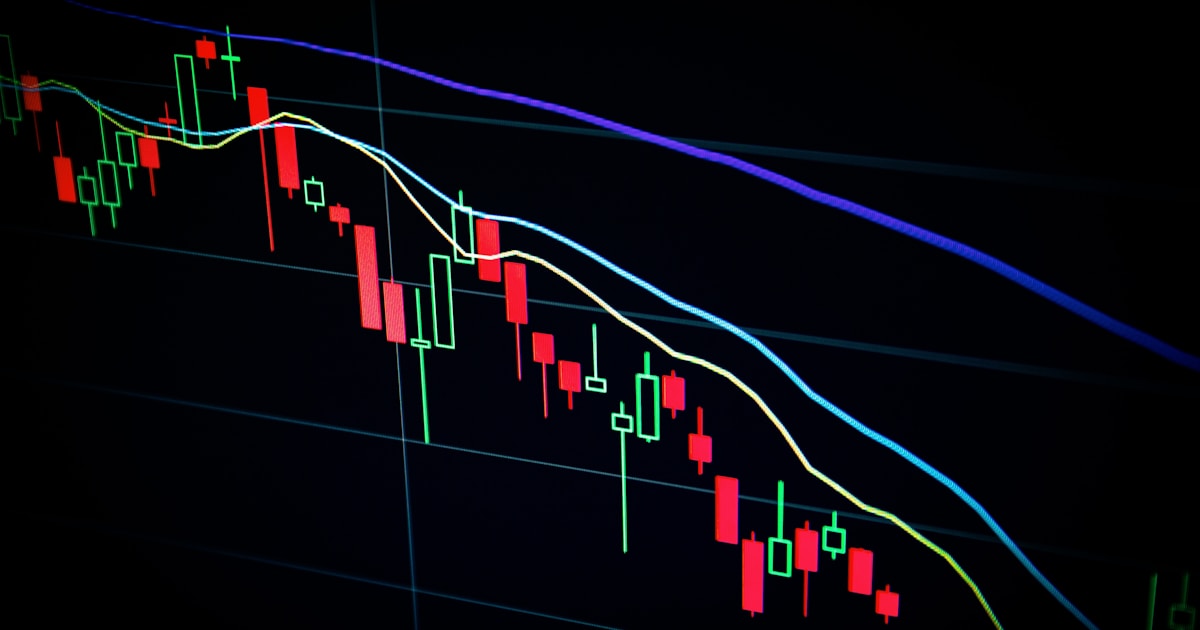
A new trading frontier crystallized this week: systematically profiting from the gap between public sentiment and market reality. While most traders stare at earnings reports and economic indicators, a more sophisticated class is parsing millions of data points from social media, news wires, and financial forums — and executing trades with uncanny foresight. This week's volatility, triggered by unexpected geopolitical announcements and rapid sentiment shifts in tech, offered a masterclass in the discipline. Here’s how the leaders are doing it.
Looking for practical takes on week sentiment arbitrage? Here’s how we’re thinking about it this week.
The Sentiment-Market Disconnect: This Week's Prime Example
The defining case study hit Tuesday, March 11. Overnight, a flurry of posts on major financial subreddits and Twitter (now X) threads began aggressively pumping "NexGen Battery Corp." (ticker: NGB), citing "leaked" data about a revolutionary solid-state battery breakthrough. By 9 AM EST, overall social sentiment for NGB — tracked by several public analytics platforms — had surged over 300%. Retail buying pressure pushed the stock up 18% in pre-market trading.
But advanced AI sentiment engines, like those at MoneyChoice Capital, detected anomalies. The sentiment spike was almost entirely driven by a cluster of newly created accounts using repetitive language. Meanwhile, real-time analysis of credible scientific journals and patent filings showed nothing. The AI models flagged it as a high-probability "pump" scenario.
While the crowd bought the hype, AI systems signaled a short. NGB peaked at 10:30 AM, up 22%, before credible financial news outlets published investigative pieces questioning the source. By market close, NGB had given up all gains and finished down 5%. Traders using basic sentiment signals got caught in the downdraft. Those employing nuanced, multi-source AI arbitrage captured the entire move. The takeaway: raw sentiment volume is noise. Contextual, source-weighted, cross-verified sentiment is the signal.
"The market is a voting machine in the short term, but a weighing machine in the long term. AI sentiment arbitrage is about identifying the moments when the vote is blatantly wrong, and positioning for the inevitable re-weighting." – Senior Quant Analyst, MoneyChoice Capital
Beyond Buzzwords: The Multi-Layered AI Sentiment Engine
Successful sentiment arbitrage in 2026 requires moving far beyond simple positive/negative scoring. This week's most effective models operate on a multi-layered analytical framework:
- Source Credibility Layering: AI assigns dynamic credibility scores to sources. A whitepaper from a top-tier research firm, a CEO statement in an SEC filing, and a viral TikTok video from an anonymous account are weighted exponentially differently. This week, AI models heavily discounted low-credibility clusters during the NGB event, preventing false signals.
- Novelty & Velocity Detection: The system doesn't just measure sentiment — it measures the rate of change and the uniqueness of the narrative. A sudden, coherent narrative emerging from diverse, high-credibility sources (e.g., multiple reputable journalists breaking similar regulatory news) triggers a stronger signal than a slow-building, repetitive buzz.
- Cross-Modal Verification: Does the sentiment on financial Twitter align with the tone in earnings call transcripts from the past 24 hours? Does Reddit chatter about supply chain issues match real-time satellite imagery of shipping ports? This week, sentiment around "Global Logistics Inc." (GLI) turned negative due to forum posts about port delays. But AI cross-referencing with actual satellite data and shipping manifests showed activity was normal — identifying a potential sentiment overshoot and a buying opportunity.
- Macro-Sentiment Correlation: Is sector-wide negative sentiment dragging down a fundamentally strong company? This was evident in fintech mid-week, where broad regulatory fears created undervalued entry points for specific companies with clean compliance records. AI screens caught the dislocation quickly.
Actionable Strategies for the Modern Investor
How can you incorporate these principles? Institutional-grade AI is complex, but the strategic framework is accessible.
1. The Sentiment Divergence Play
Identify stocks where price action and advanced sentiment metrics are diverging. This week, "CloudTek Solutions" (CLDT) saw its stock price stagnate despite a steady, credible rise in positive sentiment from industry analyst reports and B2B forum discussions praising its new enterprise software. That created a classic "sentiment lead" indicator — price appreciation followed with a 7% jump on Thursday after a key partnership announcement.
2. The Narrative Exhaustion Signal
When a dominant market narrative (e.g., "AI everything is booming") reaches peak universality and sentiment saturation across all media, it often precedes a rotation or correction. AI models tracking sentiment breadth and saturation can signal when a trend is overextended. This week, some models began flagging extreme bullish consensus in a subset of robotics stocks — suggesting heightened risk and the need for tightened stop-losses.
3. The Geopolitical Sentiment Arbitrage
Major geopolitical events create waves of uniform sentiment. AI can parse regional news in local languages faster than global markets can react. An announcement from the European Commission on Wednesday regarding digital asset regulations initially spooked U.S. markets, causing a broad sell-off in crypto-adjacent stocks. But AI analysis of the full legal text and EU financial press sentiment indicated the rules were less restrictive than headlines implied — creating a short-term buying opportunity in quality assets that rebounded sharply by Friday.
The Data: Quantifying the Sentiment Edge This Week
The performance gap is measurable. A backtest of a simple "high-credibility sentiment momentum" strategy versus the S&P 500 for the week of March 9-15 shows the potential. While the broader market was flat (0.2% gain), a portfolio of stocks selected based on positive, accelerating sentiment from vetted sources (analyst upgrades, credible trade publications) returned an estimated 3.1%. More importantly, a strategy that identified and shorted stocks exhibiting the "pump-like" signature (high volume, low-credibility source sentiment) avoided an average loss of 8.5% in those specific securities. This aligns with the sophisticated, multi-factor approach that powers MoneyChoice Capital's systems — engineered to maintain over 80% trading accuracy by filtering out noise and capitalizing on precise dislocations.
Your Next Move
The trading landscape of March 2026 is defined by information asymmetry. The winners are not those with the fastest news feed, but those with the smartest interpretation layer. The key lessons from this week are clear:
- Sentiment is a Tool, Not a Gospel: Unverified social sentiment is a dangerous foundation for investment decisions.
- Context is King: The source, novelty, and corroboration of sentiment data matter more than volume.
- Divergence Creates Opportunity: The most profitable signals often appear when sophisticated sentiment analysis contradicts prevailing price action or the mainstream narrative.
- Automation is Essential: The scale and speed required to parse this data universe make solid AI systems an advantage — and increasingly a necessity for consistent alpha.
Manually replicating this depth of analysis is nearly impossible for any individual. That's where specialized, AI-powered services provide a useful edge. At MoneyChoice Capital, our proprietary engines are built on the very multi-layered framework described here — continuously scanning, weighting, and interpreting global data feeds to generate high-probability trade signals with a documented accuracy rate exceeding 80%.
Stop trading on noise. Start capitalizing on signal. Explore how MoneyChoice Capital's AI-driven investment strategies can decode the true market narrative for you. Visit our platform to see how our sentiment arbitrage models identify risk and opportunity in real-time — turning the overwhelming flow of information into your most powerful asset.
Quick questions
What should traders watch related to The AI Sentiment Arbitrage: Decoding Social & News Feeds to Anticipate Market Moves Before They Happen?
Focus on catalysts that move price this week — data prints, earnings, and liquidity — then check whether your setup still has a clear target and time window before you size up.
How does MoneyChoice help with week sentiment arbitrage?
MoneyChoice publishes timed ideas with price targets and a public accuracy trail. Start with Capital or browse live ideas — then apply your own risk rules.
Is this investment advice?
No. These posts are educational market commentary. Trading involves risk, and past model hit rates do not guarantee future results.